लंबी पढ़त
Northern Lights: Sharing the Magic of the Aurora
Arctic research often explores phenomena that cannot be experienced anywhere else on Earth, and few natural wonders are more closely linked to the far north than the aurora, also known as the northern lights. These breathtaking displays appear as glowing curtains of green, red, and sometimes violet light moving across the dark Arctic sky.
Madeline Sinclair
रचनाकार
चखने से पहले
नीचे पूरी रचना पढ़ें।
परोसा गया
पत्रिका
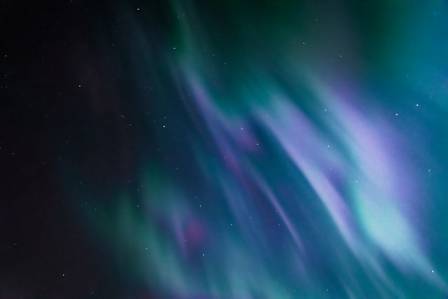
Arctic research often explores phenomena that cannot be experienced anywhere else on Earth, and few natural wonders are more closely linked to the far north than the aurora, also known as the northern lights. These breathtaking displays appear as glowing curtains of green, red, and sometimes violet light moving across the dark Arctic sky.
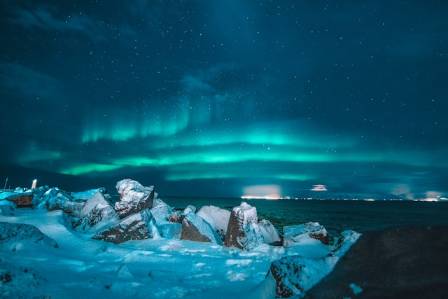
One of the world’s most famous destinations for viewing the aurora is Yellowknife, located directly beneath the auroral oval. This oval is a narrow zone surrounding the planet where electrically charged particles guided by Earth’s magnetic field enter the upper atmosphere and create the spectacular lights. When the sky is clear and darkness has settled in, visitors to Yellowknife have an excellent chance of seeing the aurora. The city experiences these displays on roughly 100 nights each year, making it one of the best viewing locations on the planet.
Experience the Aurora from Anywhere
Not everyone has the opportunity to travel to Yellowknife, but technology has made it possible to enjoy the aurora remotely. Through a project called AuroraMAX, people around the world can watch live broadcasts of the northern lights online during aurora season, which generally lasts from September through April.
The AuroraMAX program also provides updates through social media, including alerts about nights when stronger auroral activity is expected. For those interested in becoming more involved, the Auroral Zone offers a chance to participate in scientific research. This citizen science project allows volunteers to examine and classify aurora images while learning more about different auroral forms and the science behind them.
Fascinating Facts About the Northern Lights
Whether you are standing outside on a frozen lake near Yellowknife in temperatures of -40°C or watching from home with a warm drink beside you, the moving colors and shapes of the aurora inspire curiosity and wonder. These glowing patterns raise many interesting questions about how they form and why they appear in different ways.
Why Are Auroras Usually Green?
The most common color seen in the northern lights is green. This happens when energetic electrons traveling along Earth’s magnetic field collide with atoms and molecules in the upper atmosphere.
When these particles strike oxygen atoms, they excite them and cause them to release small amounts of light known as photons. The green color comes from a particular energy state of oxygen atoms, which is easily activated in the upper atmosphere.
Why Do Auroras Sometimes Appear Red?
Red auroras are also produced by oxygen, but they occur at much higher altitudes than the familiar green glow. At these elevations, the atmosphere is much thinner, meaning oxygen atoms can remain excited long enough to release red-colored photons before colliding with other particles.
Because human eyes are less sensitive to red light and red emissions are generally weaker, these colors are not seen as often as green. The result is that most aurora displays appear predominantly green, with red occasionally appearing above or alongside them.
Where Do Violet Auroras Come From?
Purple or violet shades can appear near the lower edges of auroral curtains. These colors are created when energetic electrons interact with ionized nitrogen molecules in the atmosphere.
At higher levels of the atmosphere, lighter particles are found above heavier ones, creating different layers where various colors of aurora can develop.
How High Are the Northern Lights?
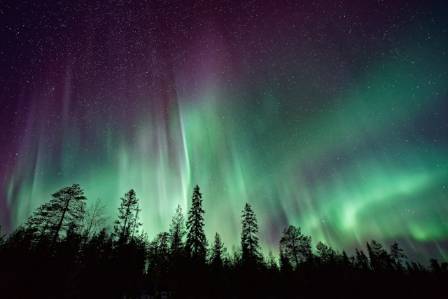
Auroras usually occur between approximately 90 kilometers and 400 kilometers above Earth’s surface, and sometimes even higher. Although they may appear close enough to touch, these glowing formations actually exist far above the ground in the upper atmosphere.
What Creates Different Aurora Shapes?
Scientists continue to study why auroras take on different forms. They may appear as flowing curtains, scattered patches, or circular crowns known as coronas.
The exact shape depends on complex interactions between solar particles, Earth’s magnetic field, and conditions in near-Earth space. Many of these processes are still not fully understood and remain an important area of scientific investigation.
Do Auroras Really Make Sounds?
Some observers have claimed to hear faint noises such as crackling, hissing, or soft swishing sounds while watching the northern lights. However, scientific studies have not yet confirmed that auroras themselves produce audible sounds.
Because the atmosphere is extremely thin at the altitude where auroras occur, sound waves cannot easily travel from that height to the ground. If sounds are produced, they are more likely connected to lower atmospheric processes influenced by auroral activity.
Can Auroras Be Dangerous?
The lights themselves are harmless, but the charged particles that create them can sometimes have significant effects.
During powerful solar storms, these particles can interfere with satellites, disrupt communication systems, and generate strong electrical currents in power networks. In extreme cases, this can lead to equipment damage or widespread power interruptions.
Stories and Legends About the Aurora
Across Arctic cultures, the northern lights have inspired countless legends and traditions. Among Inuit communities in Labrador, one belief describes the aurora as torches carried by spirits guiding the souls of the deceased toward the next world.
Some traditions also say that the sounds occasionally associated with the lights are messages from these spirits attempting to communicate with those on Earth.
About the Researchers and Projects
Dr. David Millar is a science writer specializing in archaeology and ancient climate history. He is also a Research Associate at the Arctic Institute of North America at the University of Calgary.
AuroraMAX is a cooperative project involving the University of Calgary, the City of Yellowknife, Astronomy North, and the Canadian Space Agency.
The Auroral Zone is a citizen science initiative organized by the University of Calgary’s Department of Physics and Astronomy and the Arctic Institute of North America, with support from the Canadian Space Agency, AuroraMAX, and Aurorasaurus.
अगला स्वाद
The Beauty of Dandelions: Short Poems That Capture Their Essence
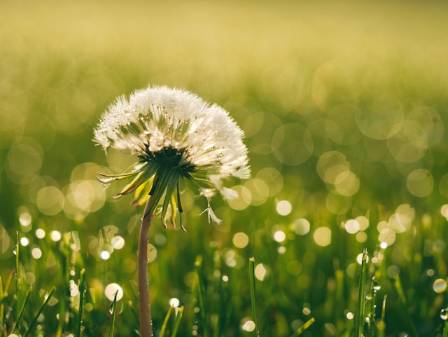
Dandelions, with their bright yellow blossoms and fluffy seed heads, are often overlooked as common weeds. Yet these humble plants have long inspired poets, who see in them symbols of beauty, hope, endurance, and transformation. Through simple verses, dandelions reveal deeper meanings about life, dreams, and the passing of time.

The 5 Most Remarkable Robotic Space Explorers
Our silicon-based companions have ventured into the universe’s harshest frontier—space itself—in humanity’s stead for decades. While stories of their robotic adventures could fill an entire volume, let’s countdown the top five.
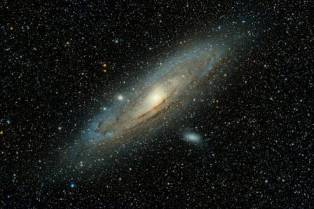
पृथ्वी का सबसे दूर स्थित अंतरिक्ष यान कौन सा है?
14 फरवरी, 1990 को, वायेजर 1 अंतरिक्ष यान - पृथ्वी से सबसे दूर का अंतरिक्ष यान - ने अपने कैमरों को वापस सूर्य की ओर मोड़ा और हमारे सूर्य और उसके ग्रहों की कई तस्वीरें खींचीं। यह हमारे सौर मंडल का पहला "चित्र" था, जैसा कि बाहर से देखा गया था। उस समय, वायेजर 1 लगभग 4 बिलियन मील (6 बिलियन किमी) दूर था। इस छवि के बारे में और पढ़ें।

How to Cold Brew Herbal Teas: A Refreshing Guide
Cold-brewed herbal tea has become increasingly popular thanks to its refreshing taste, simple preparation, and naturally smooth flavor. Unlike traditional hot infusion methods, steeping herbs in cold water extracts their flavors gradually, resulting in a drink that is often sweeter, less bitter, and more aromatic. Whether you're looking for a healthy beverage or a creative way to enjoy your favorite herbs, cold brewing offers an easy and enjoyable solution.
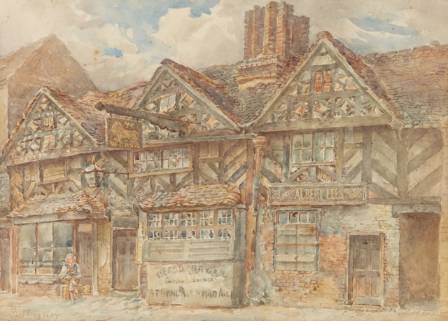
Todd Saal's Watercolor Journey: Weaving Stories and Ephemeral Moods
Few things in the realm of art are as dream-inducing as the interplay of diluted pastel pigments on velvety white paper. Colors meld and mingle like raindrops dancing on a canvas, pulling down hues from the heavens above. Watercolor paintings convey an air of spontaneity, as if a mere flick of water could bring them to life. Yet, in reality, mastering the art of watercolors demands a unique commitment and technique that sets it apart from other mediums. This is the realm where artist Todd Saal found his true calling.
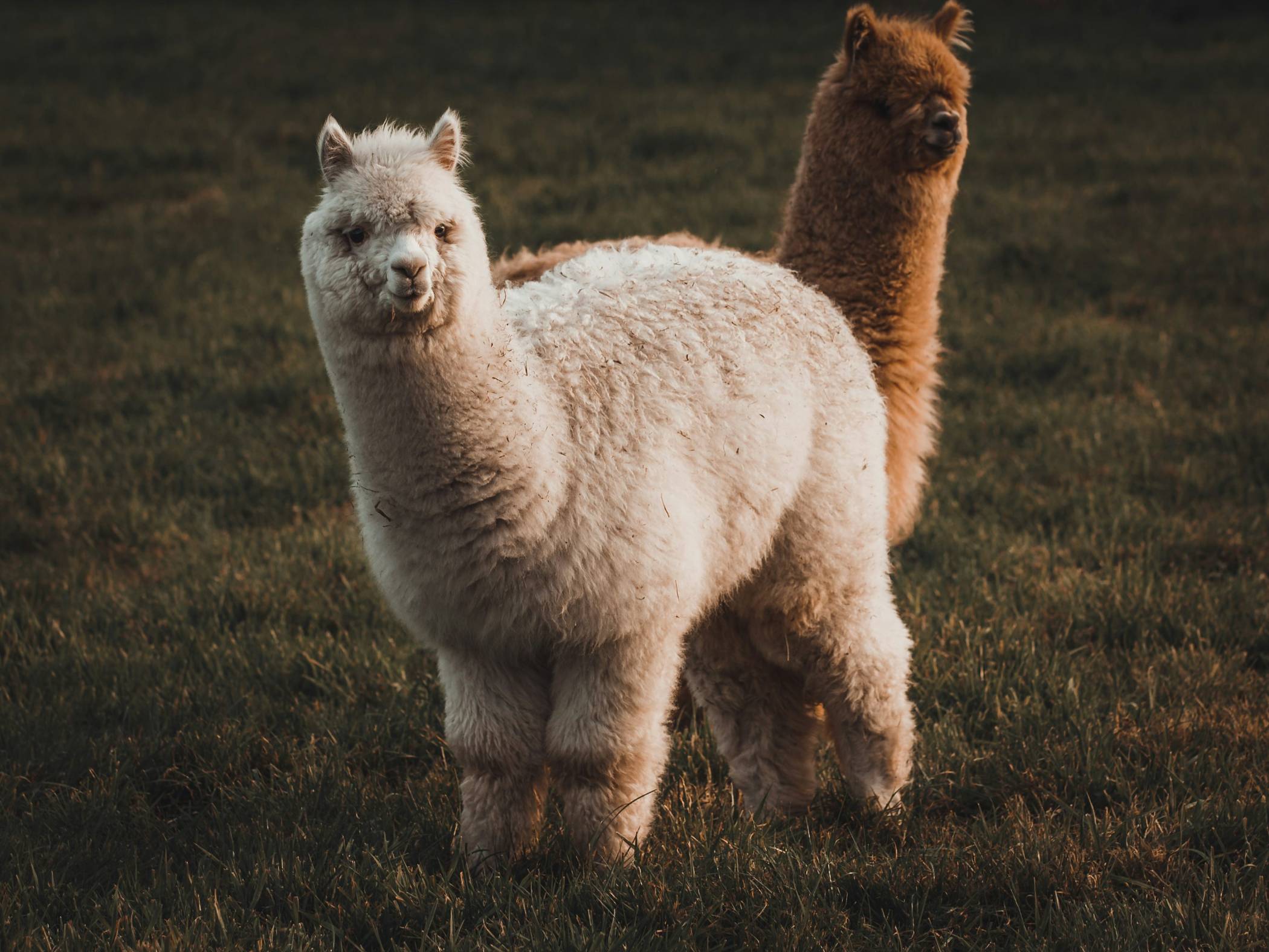
अल्पाका के बारे में 15 तथ्य जो शायद आप नहीं जानते
क्या आप अल्पाका को अपने फार्म परिवार का हिस्सा बनाने पर विचार कर रहे हैं, लेकिन यह नहीं जानते कि शुरुआत कहाँ से करें? मैं आपको बता दूँ! इस लेख में, मैं 15 तथ्य साझा करना चाहता हूँ जो आपको इन प्यारे जानवरों को और भी अधिक समझने और उनकी सराहना करने में मदद करेंगे।