लंबी पढ़त
What it’s really like visiting the Taj Mahal
I’ve occasionally arrived at places that are described as “among the greatest in the world,” only to feel a slight sense of letdown. More often than not, the site itself isn’t the issue—it’s the overly idealized image I’ve built in my mind beforehand.
Noah Whitman
रचनाकार
चखने से पहले
नीचे पूरी रचना पढ़ें।
परोसा गया
पत्रिका
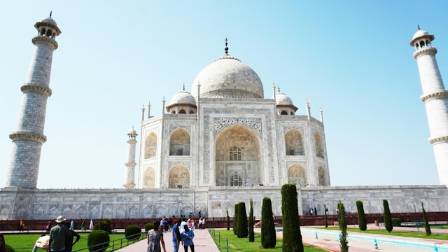
I’ve occasionally arrived at places that are described as “among the greatest in the world,” only to feel a slight sense of letdown. More often than not, the site itself isn’t the issue—it’s the overly idealized image I’ve built in my mind beforehand.
When imagination gets mixed with endless scrolls of overly polished Instagram photos, expectations can become unrealistically high. That combination can easily lead to disappointment. I’ll admit, I had similar concerns about the Taj Mahal. Its global reputation felt so immense that I wondered whether it could ever truly live up to the hype—or whether I would end up as yet another unimpressed visitor who “just didn’t get it.”
But I can say honestly that I was completely wrong. The first time I saw the Taj Mahal, it genuinely stopped me in my tracks. I can’t even say I blinked much—it was one of those rare moments where you simply stand still.
It didn’t just meet expectations. It surpassed anything I had imagined.
Not long ago, I encountered the Taj Mahal during my Intrepid journey from Delhi to Kathmandu, and I want to explain why it deserves every bit of praise it receives—and why it is, without exaggeration, something worth seeing at least once in a lifetime.
The story behind the Taj Mahal
The origin of the Taj Mahal feels almost mythical, as if it were written for a novel rather than recorded in history. If it weren’t a documented fact, it would seem like pure romantic fiction.
At its core, the Taj Mahal is a monumental expression of devotion. Mughal Emperor Shah Jahan commissioned it in memory of his most cherished wife, Mumtaz Mahal. In many ways, he succeeded beyond imagination—because her name, and their story, have become immortalized through this structure.
While exploring the grounds, I learned that the construction cost was around 30 million rupees at the time, spanning roughly two decades from 1632 to 1653. Adjusted to modern value, that would be close to a billion US dollars. The idea that a ruler invested such vast resources into a single monument dedicated to love is astonishing.
Even more remarkable is the scale of human effort involved. Craftsmen, architects, stoneworkers, calligraphers, and artisans—tens of thousands in total—were brought together from across the empire to create it. Among all Indo-Islamic architectural achievements, the Taj Mahal remains unmatched.
Making the most of your visit
To be honest, simply being on the grounds is already meaningful in itself. However, having a sense of direction for your visit helps you appreciate it more deeply. On an Intrepid tour, there is usually enough time allocated to explore without feeling rushed, which makes a big difference.
Tour leaders also play an important role in shaping the experience. In my case, our guide Chime offered insightful context throughout the visit. I asked countless questions before, during, and after exploring the site, and they were always answered with enthusiasm rather than impatience.
Arrival and first impressions
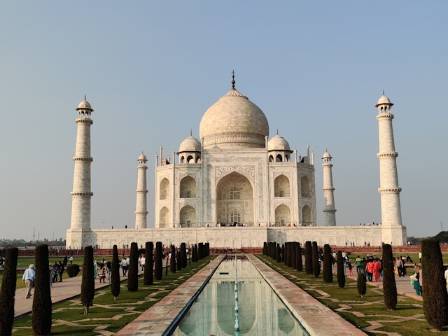
Most visitors enter through the Eastern Gate, especially foreign travelers. After security checks, you proceed toward the main forecourt and entrance gateway. This is where anticipation builds.
As you pass through the main gate, the Taj Mahal suddenly appears in full view. It is a moment worth pausing for. In today’s fast-paced world, I would even suggest resisting the urge to immediately reach for your phone—just take it in as it is.
Few experiences in travel feel as powerful as that first direct view. Having visited many countries myself, I can confidently say it is one of the most awe-inspiring sights I have ever encountered. It is not merely balanced or well-designed—it feels flawless.
Walking forward through the gardens, reflecting pools, and pathways with the monument framed in the distance creates an unforgettable scene. From there, it is tempting to photograph everything, but the structure is best appreciated slowly, step by step.
The Taj is flanked by two buildings: a mosque on one side and a guest hall (mehman khana) on the other, each adding symmetry and balance to the complex. As you approach the mausoleum, the sense of craftsmanship becomes even more apparent.
Why the Taj Mahal stands apart
While most of us cannot relate to spending unimaginable wealth on a monument of love, we can understand the desire to express affection in a lasting way. That emotional foundation is part of what makes the Taj Mahal so powerful.
It is not only its story that moves people, but also its perfection in design and execution. There truly is nothing else quite like it, nor likely will there ever be again.
These are the kinds of places that remind us why travel matters—not because of photographs or checklists, but because of the moments that stay with us long after we leave.
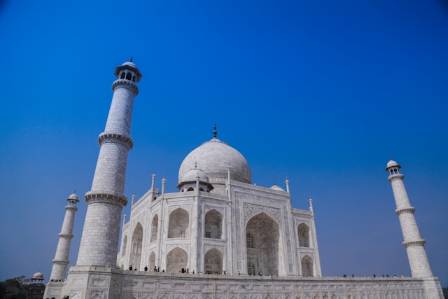
I may forget many small details from my journeys, but the image of that ivory-white marble glowing in daylight, and the slow walk through its gardens, is something I will always carry with me.
And even now, I still feel like I haven’t quite recovered from seeing it.
अगला स्वाद

The Strangest Pigments in the History of Art
Artists throughout the ages have sought the perfect colors, sometimes turning to the most unexpected sources. From crushed mummies to toxic minerals, the history of art is filled with pigments that are as fascinating as they are unusual. Here are some of the most extraordinary pigments ever used in painting.

Botanical Textile Art: A Comprehensive Guide to Crafting Felt Succulents
Creating handcrafted succulents from wool is a delightful way to capture the organic beauty of nature using textile techniques. By blending various wool types and utilizing a "resist" method, you can produce realistic, three-dimensional plants with intricate layers and lifelike contours. This project combines needle felting and wet felting to achieve a durable yet soft botanical sculpture.
5 Interesting Facts About Lambs and Why They Should Stay Off Our Plates
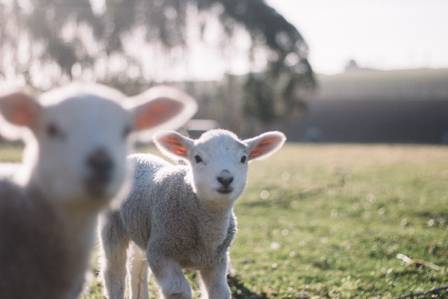
Lambs can stand and walk within minutes of being born. In the wild, they travel long distances to forage and can remember complex routes. Sadly, lambs raised for meat rarely get the chance to explore, as many are slaughtered as early as six weeks old.
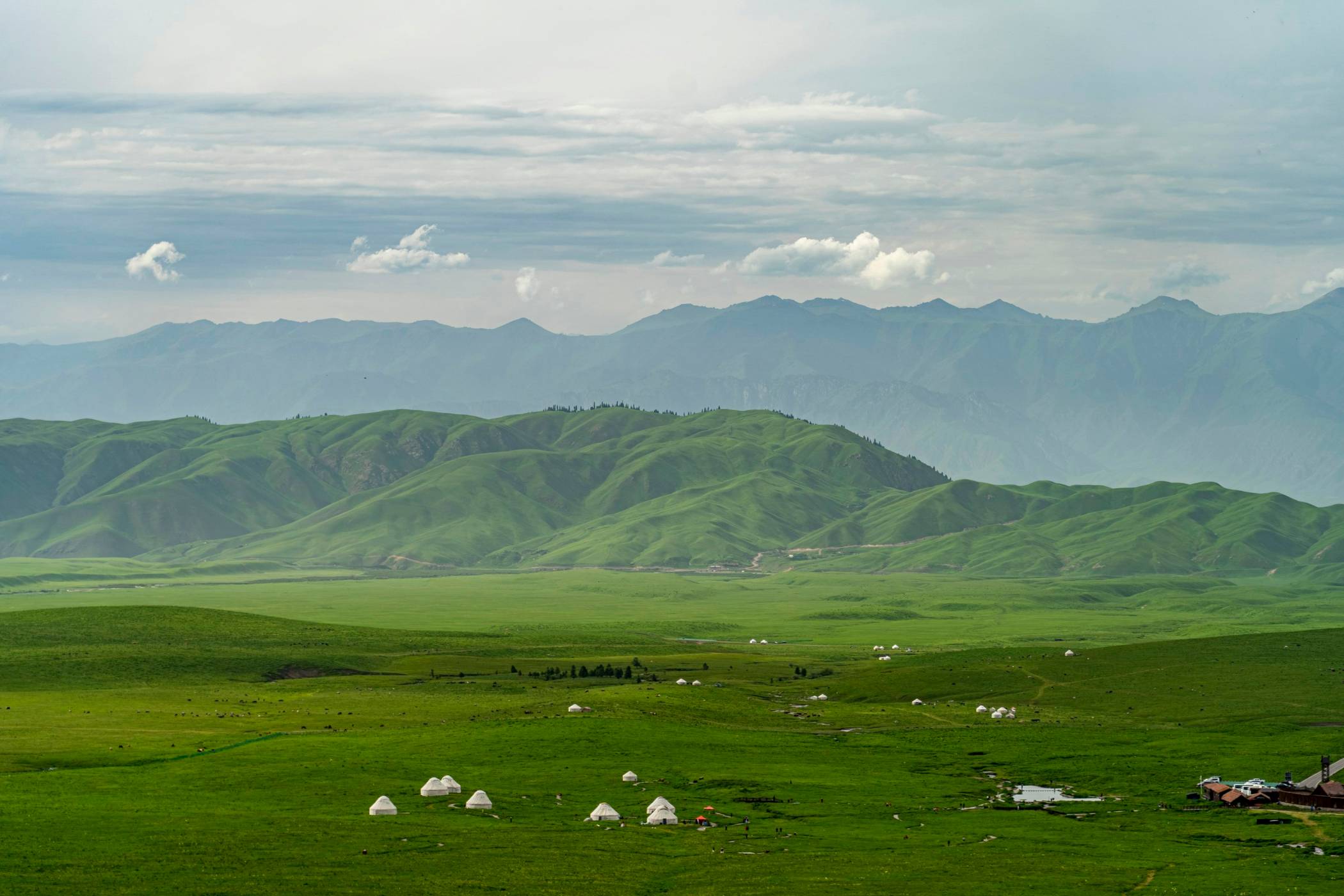
दुनिया के 10 सबसे बड़े घास के मैदान
घास के मैदान अंतहीन रूप से फैले हुए हैं, बहते बादलों का भार ढोते हुए

Assorted Tempura Recipe
Tempura is a well-known Japanese dish that has become just as popular in the United States as sushi. The good news is that it is actually quite simple to prepare at home once you understand the basics.

2025 में अधिकतम सुरक्षा के लिए शीर्ष रेटेड सेडान
नई वाहन की खोज करते समय, सुरक्षा अधिकांश कार खरीदारों के लिए प्रमुख प्राथमिकता बनी रहती है। आधुनिक सेडान अब उन्नत सुरक्षा प्रौद्योगिकियों से लैस हैं, जो बुनियादी एयरबैग और सीटबेल्ट्स से बहुत आगे जाती हैं। अत्याधुनिक क्रैश अवॉयडेंस सिस्टम से लेकर मजबूत वाहन संरचनाओं तक, आज के सबसे सुरक्षित सेडान ड्राइवरों और यात्रियों के लिए समग्र सुरक्षा प्रदान करते हैं। यहां उन सबसे सुरक्षित सेडान मॉडलों का गहराई से अवलोकन किया गया है, जिन्हें उनकी असाधारण सुरक्षा प्रदर्शन के लिए पहचाना गया है।