लंबी पढ़त
National Flag of India
Mahatma Gandhi once stated, “A flag is essential for every nation. Millions have sacrificed their lives for it. Destroying it would be a form of idolatry and a sin. A flag represents an ideal.” The national flag serves as a symbol of a country’s identity, announcing its sovereignty to the world and reflecting the values upon which the nation is founded.
Casey Morgan
रचनाकार
चखने से पहले
नीचे पूरी रचना पढ़ें।
परोसा गया
पत्रिका
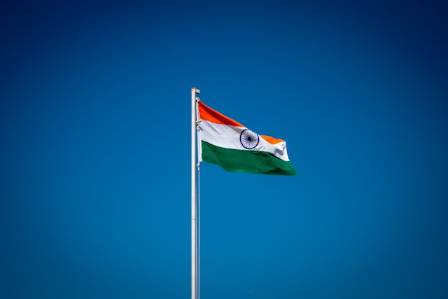
Mahatma Gandhi once stated, “A flag is essential for every nation. Millions have sacrificed their lives for it. Destroying it would be a form of idolatry and a sin. A flag represents an ideal.” The national flag serves as a symbol of a country’s identity, announcing its sovereignty to the world and reflecting the values upon which the nation is founded.
Indian National Flag
India’s national flag is a rectangle composed of three horizontal bands of color: saffron, white, and green. This design was officially adopted by India’s Constituent Assembly on July 22, 1947, just 24 days before India gained independence.
Design Features
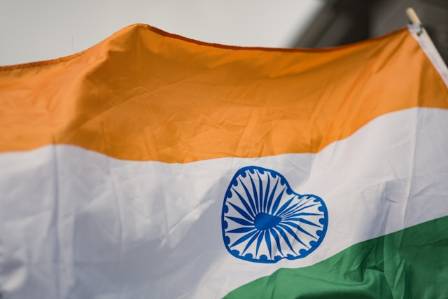
The tricolor flag has three equal horizontal stripes with saffron on top, white in the middle, and green at the bottom. At the center of the white stripe is the Ashok Chakra, depicted in navy blue. This wheel is hollow with 24 spokes radiating from its center. The official color codes for the flag are: saffron (#FF9933), white (#FFFFFF), green (#138808), and navy blue (#000080). The flag must maintain a 2:3 proportion, meaning its length is 1.5 times its height.
The Indian flag is traditionally made of Khadi, which can be hand-woven cotton or silk, following the standards outlined by the Bureau of Indian Standards (BIS). The Khadi Development and Village Industries Commission is authorized to manufacture the flag, and as of 2009, this responsibility lies with the Karnataka Khadi Gramodyoga Samyukta Sangha.
Symbolism
Every color and symbol on the Indian flag carries deep meaning. Saffron signifies sacrifice and renunciation, white represents peace, and green stands for courage and immortality. The Ashok Chakra is a symbol of the Dharma Chakra, representing justice, righteousness, and continuous progress. The wheel’s movement signifies dynamism, reminding us that stagnation leads to decay while motion brings life and progress.
The tricolor also reflects India’s secular ethos: saffron represents Hinduism, Buddhism, and Jainism; white stands for Christianity; and green symbolizes Islam. Overall, the flag embodies a harmonious blend of all religious principles, unified under the philosophy of tolerance, guided by the Ashok Chakra.
Dr. Sarvapalli Radhakrishnan, philosopher and former Vice President of India, explained the flag’s meaning eloquently: “Saffron represents renunciation; our leaders must rise above material pursuits and dedicate themselves to service. White symbolizes truth to guide conduct. Green represents our connection with the land and its vegetation. The Ashok Chakra in the center is the wheel of dharma—truth and virtue must govern those working under this flag. The wheel also signifies progress; India must embrace change. It is a symbol of peaceful dynamism.”
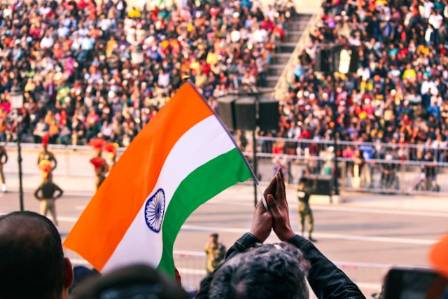
History and Evolution
Before the 1857 Sepoy Mutiny, India’s fragmented territories were represented by the flags of individual princely states. After the mutiny, the British introduced a flag for colonial India, which was blue with the Union Jack in the top left corner and a crown-enclosed star at the bottom right.
The first unofficial flag raised by Indians appeared on August 7, 1906, in Parsee Bagan, Calcutta. It had three horizontal stripes: green, yellow, and red, with the green stripe featuring 8 lotuses, the yellow displaying “Bande Mataram” in Sanskrit, and the red stripe including a crescent and sun.
In 1907, Madame Bhikaji Cama and fellow exiled revolutionaries hoisted a modified version in Paris. This flag used saffron for the first time and displayed 7 lotuses.
In 1921, Gandhi proposed a tricolor flag with a spinning wheel in the center, symbolizing religious harmony. Later, he suggested a secular interpretation of the colors: red for sacrifice, green for hope, and white for peace.
By 1923, Pingali Venkayya designed the version closest to the current flag. Featuring saffron, white, and green stripes with the spinning wheel at the center, it was first hoisted on April 13, 1923, in Nagpur to commemorate the Jallianwala Bagh Massacre. Known as the Swaraj Flag, it became a symbol of India’s independence movement led by the Indian National Congress.
On July 22, 1947, the Constituent Assembly officially adopted the Swaraj Flag as the national flag of independent India, replacing the spinning wheel with the Ashok Chakra.
Guidelines for Display
The use of the Indian flag is governed by the Flag Code of India (2002), the Prevention of Improper Use of Emblems and Names Act (1950), and the Prevention of Insults to National Honour Act (1971). Key rules include:
Display the flag upright with saffron at the top horizontally, and on the left vertically. Never show it upside down.
When indoors, the flag should be placed on the right as a position of authority.
During a procession, it should be carried on the right or in the center if alone.
The flag cannot be used as clothing or drapery.
Hoist the flag after sunrise and lower it before sunset.
The flagpole should be the highest point of a building.
Private institutions may display the flag at any time in a manner consistent with its dignity.
Citizens may also display the flag at their premises.
The flag can be flown at half-mast during mourning, as decided by the President of India.
Official flag hoisting occurs on Republic Day (January 26), Independence Day (August 15), Gandhi Jayanti (October 2), state formation days, and national weeks.
During military or personnel funerals, the flag should drape the coffin with saffron towards the head but should never touch the ground or be burnt.
A worn or damaged flag should be disposed of respectfully in private.
Importance
India’s national flag embodies the country’s secular foundation. The tricolor reflects India’s rich spiritual and philosophical heritage, rooted in the Swaraj Flag of the Indian National Congress during the freedom struggle led by Gandhi. It stands as a timeless symbol of unity, progress, and the nation’s enduring ideals.
अगला स्वाद
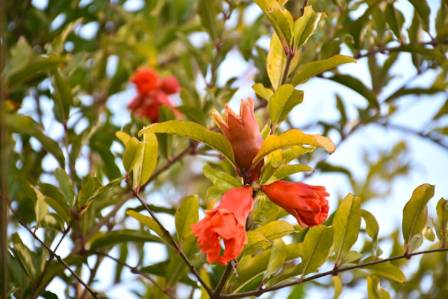
Pomegranate Flower: A Bright Fragrance
The pomegranate flower is one of the most attractive features of the pomegranate tree. Recognized for its vivid red color and elegant shape, this flowering shrub usually grows between 16 and 33 feet tall. The tree has a trunk diameter of around 1.2 inches and originally comes from the region of ancient Persia, which is now modern-day Iran.

Ocean’s Cheerful Guide
Where crashing waves meet moonlit paths, this lighthouse lights the way home. For centuries, coastal lighthouses have stood like ancient guardians at the edge of the sea—tall, weathered towers rising from cliffs or dunes, their beams sweeping across dark waters with quiet, unyielding purpose. At high tide, when the wind howls and the surf leaps against jagged stone, the lighthouse stands firm. Its rhythmic flash pierces through storm and mist, a signal that even here—at the threshold of land and sea—there is safety, direction, and the promise of return.
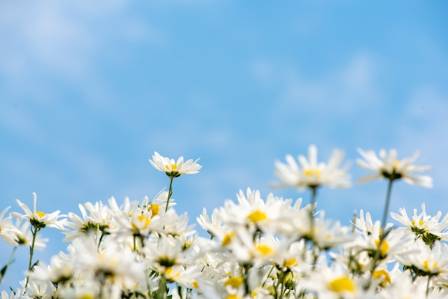
Fascinating Facts About Daisies
Daisies are beloved around the world for their bright appearance and cheerful charm. When most people imagine a daisy, they picture a flower with white petals surrounding a golden center. However, the daisy family includes many different varieties, such as Gerbera daisies and English daisies, each offering its own unique beauty.
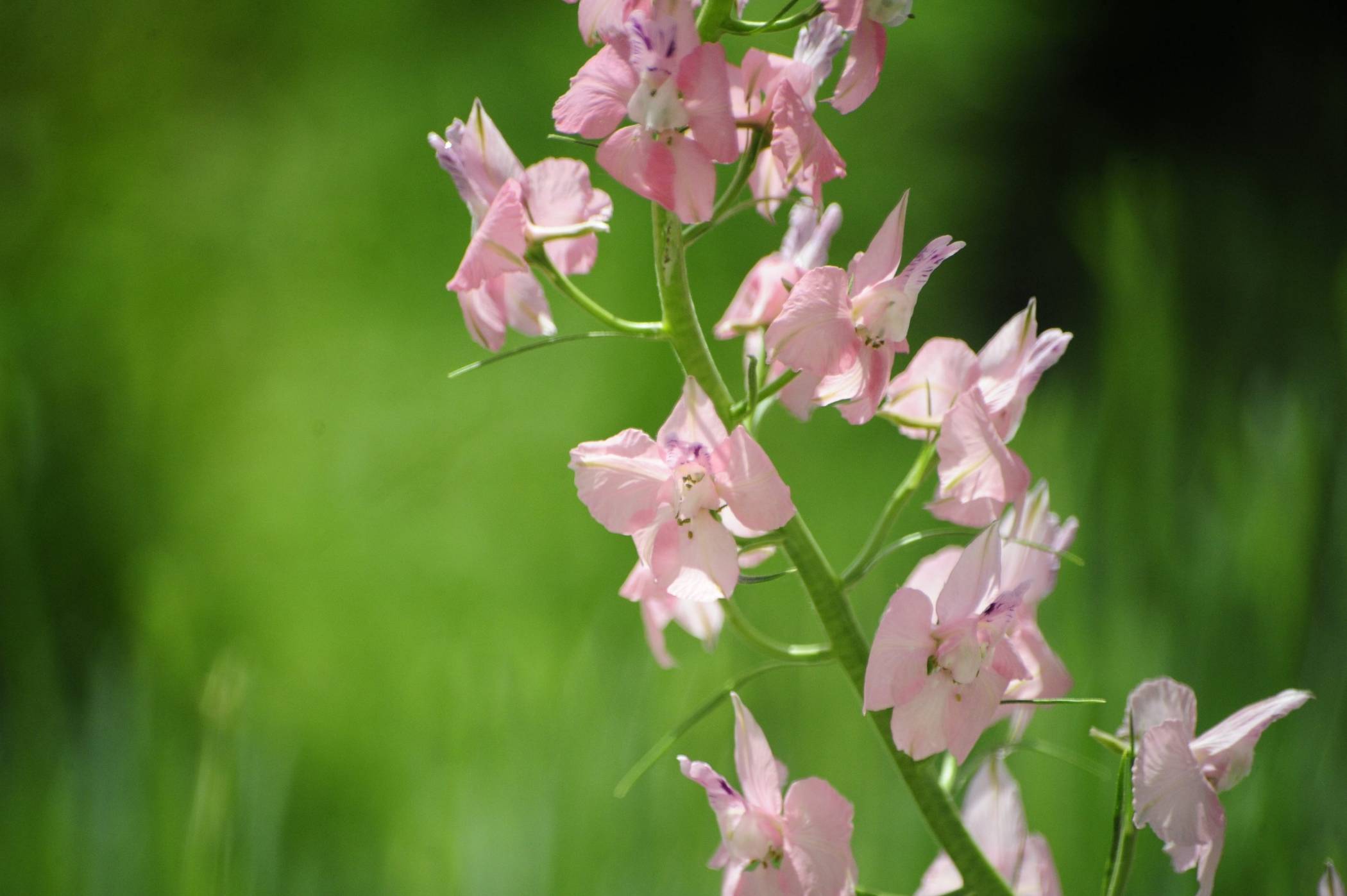
घास के मैदानों के बगीचे आजकल तेज़ी से लोकप्रिय हो रहे हैं—इसे कैसे उगाएँ, जानिए
हरे-भरे खेतों के बीच, एकांत घर, उजले आसमान के नीचे धूप में नहाया हुआ

The Rise of AI-Powered Smart Helmets
AI-powered smart helmets are changing how people stay safe and work more efficiently. By combining real-time monitoring, augmented reality (AR) displays, and hands-free communication, these devices improve awareness and performance in both professional and everyday environments.

The Most Formidable Omnivore: The Brown Bear's Realm
The brown bear (Ursus arctos), a shaggy-coated member of the Ursidae family, inhabits territories spanning Europe, Asia, and northwestern North America. This species displays remarkable diversity across its range, with numerous recognized subspecies.