लंबी पढ़त
A History of Sports Cars: Key Evolutions for Automotive Students
Sports cars are more than fast vehicles—they are testbeds for innovation and mirrors of automotive progress. For automotive students, understanding their history reveals how performance, technology, and demand shape engineering decisions. While the "first sports car" is debated, all prioritize maneuverability, speed, and driver engagement over utility. Below is a concise overview of their key milestones, tailored to highlight practical engineering insights.
Atticus
रचनाकार
चखने से पहले
नीचे पूरी रचना पढ़ें।
परोसा गया
पत्रिका

Sports cars are more than fast vehicles—they are testbeds for innovation and mirrors of automotive progress. For automotive students, understanding their history reveals how performance, technology, and demand shape engineering decisions. While the "first sports car" is debated, all prioritize maneuverability, speed, and driver engagement over utility. Below is a concise overview of their key milestones, tailored to highlight practical engineering insights.
The early 1900s marked sports cars’ racing roots. Europe led innovation: Germany’s 1900 Wanderer Rennzweier, a lightweight (550kg) two-seater with an 8hp engine, pioneered the "power-to-weight ratio"—a core principle still critical for performance. The 1902 Mercedes-Benz Simplex 60hp (60hp, 109km/h top speed) added a gated manual transmission for precision and a reinforced chassis to reduce vibration, showing how to balance power and drivability. World War I halted production but spurred progress: engineers gained experience with lightweight aluminum and durable engines via military vehicles, laying post-war groundwork.
The 1920s–1930s defined the "sports car" category. The 1923 24 Hours of Le Mans forced focus on reliability: Britain’s Bentley 3 Litre solved overheating with a large radiator, teaching students the value of thermal management. This era also popularized the front-engine, rear-wheel-drive (FR) layout—used by the 1928 Alfa Romeo 6C 1500—to achieve 50:50 weight distribution, boosting stability. The 1930s Depression pushed brands like MG to build affordable sports cars (e.g., MG TC, 850kg), proving simplicity and lightweighting could deliver driver satisfaction on a budget.
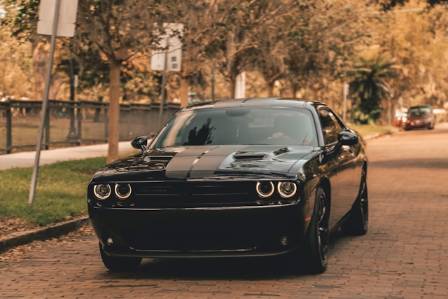
Post-WWII (1940s–1950s) brought global competition. Germany’s 1948 Porsche 356 (lightweight aluminum body, rear-engine layout) showed trade-offs: better traction but trickier high-speed handling—lessons Porsche refined with the 911. Italy’s 1947 Ferrari 125 S (V12 engine, 118hp) set a standard for smooth power, while Britain’s 1948 Jaguar XK120 (160hp, 193km/h) used dual overhead camshafts (DOHC) to boost RPMs, a feature now standard in sports cars. Jaguar’s 1950s C-Type/D-Type also introduced racing disc brakes, replacing fade-prone drums—critical for braking system studies.
The 1960s–1970s were a "golden age." Europe focused on lightweighting: Britain’s 1962 Lotus Elan (725kg, fiberglass body, steel backbone chassis) embodied Colin Chapman’s "simplify, then add lightness," teaching students how chassis design balances rigidity and weight. The U.S. built "muscle cars" (e.g., 1964 Ford Mustang, 271hp V8) prioritizing straight-line speed, showing regional design trade-offs. The 1970s oil crises and emissions rules pushed turbocharging: Porsche’s 1974 911 Turbo (260hp) proved forced induction could meet regulations while boosting performance.
The 1980s–1990s saw Japan’s rise. The 1989 Mazda MX-5 Miata (940kg, 116hp, 50:50 weight distribution) prioritized driver engagement via simplicity, becoming the best-selling sports car. Honda’s 1990 NSX (all-aluminum body, VTEC engine) revolutionized valve timing for low torque and high power, while Toyota’s 1993 Supra Turbo (320hp, twin-turbo inline-six) demonstrated durability—key lessons for reliable performance.
The 2000s–present shifted to sustainability. Porsche’s 2013 918 Spyder (hybrid, 887hp) used electric motors to eliminate turbo lag and boost efficiency. Fully electric sports cars like Tesla’s 2020 Roadster (1.9s 0-100km/h) and Rimac’s 2023 Nevera (1,914hp) present new challenges (battery weight, thermal management) and opportunities (instant torque)—shaping EV engineering studies.
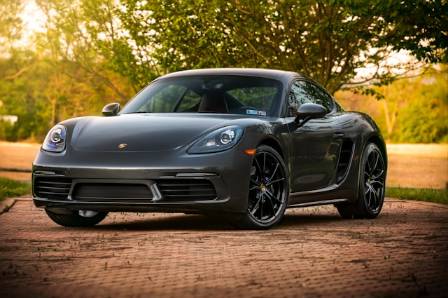
For students, sports car history is about the "why" behind design: every innovation (fuel injection, VTEC, EV motors) solved a need. As Chapman said, "Subtracting weight makes you faster everywhere"—a principle true for the 1920s Elan and today’s Nevera. Great engineering, it reminds us, connects machine and driver.
अगला स्वाद

Discover Sunny Beach: Bulgaria's Premier Coastal Resort
Sunny Beach stands as Bulgaria's most famous seaside destination, renowned for its vibrant energy and beautiful setting along the Black Sea coast. This premier resort offers a dynamic mix of attractions that cater to a wide range of visitors, from families to nightlife enthusiasts.
अपनी चित्रण शैली विकसित करना
चूँकि 11 वर्षों से चित्रण करना मेरा दैनिक कार्य है, इसलिए मुझे यह स्वीकार करना होगा कि अब मेरी स्केचबुक में चित्र बनाना मेरा नियमित शगल नहीं रहा। लेकिन मुझे सिर्फ़ अपने आनंद के लिए कुछ बनाने की खुशी भी याद आती है। हालाँकि आप बहुत सारी ड्राइंग करके अपने ड्राइंग कौशल का अभ्यास करते हैं, लेकिन अपनी चित्रण शैली ढूँढना कुछ ऐसा है जो स्केचबुक में बहुत सारे प्रयोग करने से आता है। नई शैलियों, दृष्टिकोणों, रंगों, भावों और पसंद की चीज़ों को आज़माना। मैं कहूँगा कि मेरे पास अब काफी वर्षों से अपनी खुद की 'शैली' है, लेकिन एक पेशेवर चित्रकार के रूप में भी मुझे लगता है कि आपको कभी भी विकास करना बंद नहीं करना चाहिए। मैंने एक सप्ताहांत में प्रयोग करने के लिए कुछ समय निकाला और अपनी रचनात्मकता को प्रवाहित करने के लिए डोमेस्टिका-कोर्स देखा!

दुनिया भर की 20 सबसे शानदार बिग वॉल क्लाइंब
हाथ और पैर दरारों से निकलते हैं, हर मूवमेंट सटीक और कंट्रोल्ड होता है
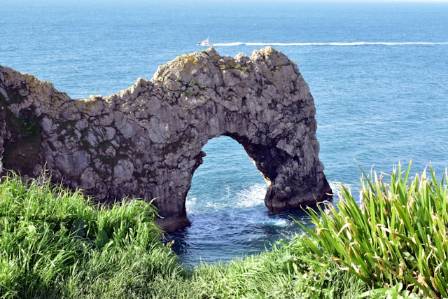
8 Spectacular Sea Arches You Must See Around the World
Sea arches are one of nature’s most stunning creations. Carved over millennia by relentless waves and tides, these stone formations offer breathtaking views and unforgettable photo opportunities. Some arches are accessible only by boat, while others can be explored on foot at low tide. Here are eight of the world’s most remarkable sea arches.

How to Cold Brew Herbal Teas: A Refreshing Guide
Cold-brewed herbal tea has become increasingly popular thanks to its refreshing taste, simple preparation, and naturally smooth flavor. Unlike traditional hot infusion methods, steeping herbs in cold water extracts their flavors gradually, resulting in a drink that is often sweeter, less bitter, and more aromatic. Whether you're looking for a healthy beverage or a creative way to enjoy your favorite herbs, cold brewing offers an easy and enjoyable solution.

7 Date Outfit Ideas That Work for Every Stage of Romance
Picking what to wear for a date can feel like a style puzzle. You want to look good, stay comfortable, and let your personality shine without overthinking every detail. The right outfit helps you walk into the room feeling confident, no matter if it’s your first meeting or a night out with a long-term partner. Here are seven outfit approaches to keep you stylish at every step of dating.