लंबी पढ़त
Exploring the Captivating World of Monkeys
Monkeys are an extraordinarily diverse and intriguing group of creatures that have held human interest for hundreds of years. Their playful demeanor, distinctive traits, and close genetic ties to humans keep them a source of fascination for researchers and wildlife lovers alike. In this article, we’ll dive into the captivating realm of monkeys, examining their behavior, the wide range of species, their interactions with humans, the habitats they call home, their dietary habits, and more. Let’s set off on this remarkable exploration to uncover what makes these primates so endlessly intriguing.
Emma Howard
रचनाकार
चखने से पहले
नीचे पूरी रचना पढ़ें।
परोसा गया
पत्रिका
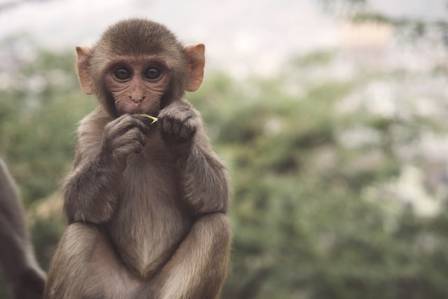
Monkeys are an extraordinarily diverse and intriguing group of creatures that have held human interest for hundreds of years. Their playful demeanor, distinctive traits, and close genetic ties to humans keep them a source of fascination for researchers and wildlife lovers alike. In this article, we’ll dive into the captivating realm of monkeys, examining their behavior, the wide range of species, their interactions with humans, the habitats they call home, their dietary habits, and more. Let’s set off on this remarkable exploration to uncover what makes these primates so endlessly intriguing.
Understanding Monkey Behavior
Monkeys are highly social animals, and their actions are shaped by a complex mix of factors. One key aspect of their behavior is communication. Monkeys use an array of vocal sounds, body positions, and facial expressions to share messages within their groups. They can let out screams, barks, and coos, each carrying a distinct meaning. Beyond that, they use gestures like lifting their arms or making eye contact to interact with other members of their troop.
Communication among monkeys isn’t limited to sounds and gestures, though. They also depend on scent signals to pass along information. Monkeys have scent glands that produce unique odors, which they use to mark their territory or signal their reproductive status. Other monkeys can detect these scent cues, gaining important details about the individual’s identity and social standing.
Another fascinating part of monkey behavior is their well-organized social structure. Monkeys live in hierarchical groups, where dominant individuals hold top positions and control subordinate members. This dominance order influences everything from access to food and potential mates to decisions about where the group moves. Monkeys also engage in grooming behavior, which serves as a way to strengthen social bonds and keep peace within the group.
Grooming isn’t just a way for monkeys to stay clean—it plays a critical role in their social dynamics. When monkeys groom one another, they not only remove parasites and dirt from each other’s fur but also build stronger connections. Grooming sessions often involve give-and-take: monkeys take turns grooming each other, which fosters trust and cooperation. This mutual care helps keep the troop stable overall.
Alongside their social nature, monkeys show impressive cognitive abilities. They can solve problems and use tools to get things done. Some monkey species have even demonstrated the ability to recognize themselves in mirrors, a sign of self-awareness.
Tool use in monkeys is a clear example of their intelligence and adaptability. Different species have been seen using tools for various tasks: cracking nuts, pulling insects out of tree bark, or even catching termites. This ability to manipulate objects to reach specific goals highlights their flexible thinking and problem-solving skills.
Furthermore, studies have shown that monkeys have a sense of fairness and equality. In experiments, monkeys have been observed refusing rewards that are unequal, showing they have a basic understanding of justice. This suggests they can make choices based on whether a situation feels fair or unfair.
In summary, monkey behavior is a fascinating topic that covers areas like communication, social structure, and cognitive skills. By understanding these details, researchers can gain valuable insights into how social behavior and intelligence have evolved—not just in monkeys, but in other animal species too.
The Diversity of Monkey Species
Monkeys aren’t a single, uniform group—instead, they include a wide variety of species, each with its own unique traits. They can be roughly divided into two main groups: Old World Monkeys and New World Monkeys.
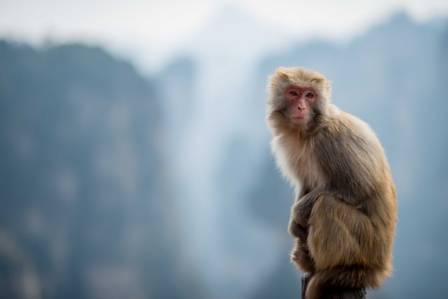
Old World Monkeys vs New World Monkeys
Old World Monkeys are mainly found in Africa and Asia, while New World Monkeys are native to Central and South America. These two groups can be told apart by several physical features, including the shape of their noses and the characteristics of their tails. Old World Monkeys have a narrow nasal septum (the wall that separates the nostrils) and often have tails that are non-prehensile—meaning they can’t grasp or hold onto objects. On the other hand, New World Monkeys have a broad nasal septum and often have long, prehensile tails that help them move through trees with ease.
Within each of these groups, there are countless species that show off unique qualities. For example, the Mandrill—known for its bright, colorful face—is the largest species of monkey. The Howler Monkey, which lives in the rainforests of South America, is famous for its extremely loud calls, which can be heard from miles away. The Capuchin Monkey, with its nimble hands and ability to use tools, has earned a reputation for its intelligence and problem-solving skills.
Monkeys and Human Interaction
The connection between monkeys and humans goes beyond just their biological relationship. Monkeys have been a key part of folklore and mythology in many cultures around the world.
Monkeys in Folklore and Mythology
In Hindu mythology, Hanuman—the monkey god—represents loyalty, strength, and devotion. Hanuman played a major role in the Indian epic Ramayana and is worshipped by millions as a deity. In the Chinese novel Journey to the West, Sun Wukong (the Monkey King) is a central character known for his magical powers and mischievous personality.
Beyond their role in myths, monkeys have also had a big impact on scientific research. Because they’re genetically close to humans, monkeys have been used in various scientific experiments to learn more about human physiology and behavior. They’ve helped researchers understand diseases, test how effective medications are, and advance medical treatments.
Conservation Efforts for Endangered Monkey Species
Sadly, many monkey species are at risk of extinction due to habitat loss, illegal wildlife trade, and other human-caused factors. Conservation groups and researchers are working hard to protect these primates and their habitats. Their efforts include creating protected areas where monkeys can live safely, putting stricter laws in place to stop hunting and illegal trade, and educating local communities about why it’s important to save these amazing creatures.
The Habitats of Monkeys
Monkeys are highly adaptable animals and can be found in a range of habitats across the globe. From thick rainforests and savannahs to mountainous areas and even cities, monkeys have managed to find ways to survive and thrive.
Adaptation to Various Environments
Monkeys have evolved to make use of the resources available in their specific environments. Some species, like Rhesus Macaques, have adapted to urban areas, they search for food in human waste and get used to being around people. Others, such as the Proboscis Monkey, have special adaptations for their habitats: for example, their long, hanging noses help them feed underwater.
However, the growing destruction of natural habitats due to deforestation and human expansion poses a major threat to monkey populations worldwide.
Impact of Habitat Loss on Monkey Populations
Losing their natural habitats has serious consequences for monkeys. As their living spaces shrink, monkeys struggle to find food, shelter, and mates. This leads to more competition and conflict both within their own groups and with other monkey groups. Additionally, when habitats are broken up into small, isolated patches, monkey populations become cut off from each other. This reduces genetic diversity, making them more vulnerable to diseases and other threats.

The Diet and Nutrition of Monkeys
Monkeys have adapted to a wide range of diets based on their habitats and the food sources available to them.
Foraging Habits and Food Preferences
Some monkey species, like the Howler Monkey, mainly eat leaves. They have specialized digestive systems that let them get nutrients from this tough, fibrous food. Others, like the Capuchin Monkey, are omnivores—their diet includes fruits, nuts, insects, and even small vertebrates (like lizards or birds).
Monkeys’ foraging habits also play an important role in their ecosystems by helping spread seeds and regenerate plants. When monkeys eat fruits and seeds, they later disperse the seeds through their feces. This helps different plant species grow and spread across the environment.
Nutritional Requirements and Feeding Behaviors
Like humans, monkeys need a balanced diet to stay healthy. They require a mix of carbohydrates, proteins, fats, vitamins, and minerals to survive.
Feeding behaviors vary from one monkey species to another. Some spend the whole day actively searching for food, while others take a more opportunistic approach—eating whatever food they happen to come across. Monkeys use different techniques to feed: for example, they might use sticks to pull insects out of tree bark or use rocks to crack open hard nuts.
In conclusion, the captivating world of monkeys offers a unique look at the complexity of nature and the amazing diversity of life on our planet. From their intricate social structures and communication systems to their ability to adapt to different habitats and their varied dietary needs, monkeys continue to fascinate researchers and inspire conservation work. By studying and appreciating these remarkable creatures, we can gain a deeper understanding of our own place in the natural world and work to make sure they survive for future generations. So let’s keep celebrating and protecting the captivating world of monkeys.
अगला स्वाद

गोल्फ़ - स्वास्थ्य लाभ
इस खूबसूरत खेल में हर स्ट्रोक एक सुंदर नृत्य है, जो कौशल और शैली का सम्मिश्रण है।
जिराफ़ के बारे में 10 तथ्य!
अब समय आ गया है कि प्रकृति के सौम्य दिग्गजों में से एक के बारे में जानें! सुंदर जिराफ़ के बारे में हमारे दस तथ्य देखें…

The Rise of AI-Powered Smart Helmets
AI-powered smart helmets are changing how people stay safe and work more efficiently. By combining real-time monitoring, augmented reality (AR) displays, and hands-free communication, these devices improve awareness and performance in both professional and everyday environments.

Draw A Realistic Cat Step by Step
Want to create an adorable, lifelike cat drawing, even if you’ve never attempted animal sketches before?

Fascinating Facts About Daisies
Daisies are beloved around the world for their bright appearance and cheerful charm. When most people imagine a daisy, they picture a flower with white petals surrounding a golden center. However, the daisy family includes many different varieties, such as Gerbera daisies and English daisies, each offering its own unique beauty.

बाहर निकलने के स्वास्थ्य लाभ
बाहर घूमना आपको व्यायाम करने की अधिक संभावना है, खासकर यदि आप एक बच्चे हैं। आपको जिम सदस्यता, परिवहन, या विशेष उपकरणों की आवश्यकता नहीं है: बस अपने दरवाजे से बाहर चलें। आप अपने स्थानीय पार्क में एक साधारण झुकाव के साथ कई जिम अभ्यास कर सकते हैं, बार खींच सकते हैं, या चरणों का सेट कर सकते हैं। हवा और असमान जमीन का धक्का आपको अपने वर्कआउट को अलग करने और अधिक कैलोरी जलाने में मदद कर सकता है।