लंबी पढ़त
What's that Weed? Dollarweed!
Dollarweed, often called pennywort, is a warm-season perennial broadleaf weed that commonly appears in lawns and turf areas. It belongs to the parsley family and includes several related species, such as marsh pennywort, coastal plain pennywort, many-flowered pennywort, and whorled pennywort.
Vivian Carter
रचनाकार
चखने से पहले
नीचे पूरी रचना पढ़ें।
परोसा गया
पत्रिका
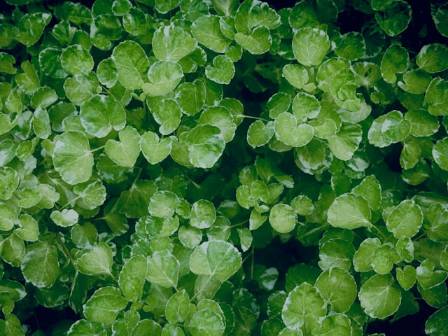
Dollarweed, often called pennywort, is a warm-season perennial broadleaf weed that commonly appears in lawns and turf areas. It belongs to the parsley family and includes several related species, such as marsh pennywort, coastal plain pennywort, many-flowered pennywort, and whorled pennywort.
This weed spreads through multiple methods, including rhizomes, seeds, and underground tuber-like structures. Rhizomes are horizontal underground stems that continue growing and produce new shoots and roots along their length, making dollarweed highly effective at spreading once established.
Where Dollarweed Grows
Dollarweed can invade many types of turfgrass found throughout North America, especially in warmer southern regions. It prefers hot, humid environments and is particularly common in areas of the southern United States.
In places such as southern Florida, dollarweed can quickly dominate St. Augustine grass lawns. It usually becomes a problem in thin or weakened turf where growing conditions favor weed development.
Common areas where dollarweed appears include poorly maintained residential lawns, golf course fairways and rough areas, athletic fields, recreational spaces, and industrial landscapes.
This weed often develops in locations with excessive moisture, including overwatered lawns, damp soil, and areas with poor drainage.
The size of dollarweed leaves can change depending on mowing practices. Frequent mowing may keep leaves as small as about 1 cm wide, while plants left unmowed can develop leaves measuring 6 to 10 cm across. This difference is often noticeable in golf course turf management.

How to Identify Dollarweed
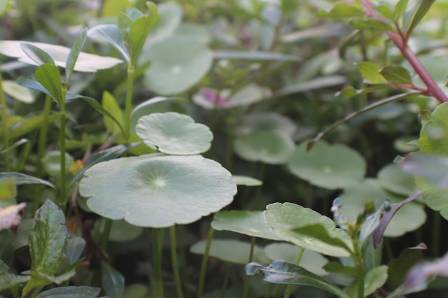
Dollarweed grows close to the ground and is easy to recognize by its bright green, shiny, round leaves with wavy or scalloped edges. The leaf shape resembles a small lily pad, and some leaves can become as large as a silver dollar, which explains the plant’s common name.
The leaf stalk, known as the petiole, is long and narrow and connects directly to the center of the leaf. This creates a distinctive umbrella-like appearance.
During summer, dollarweed produces clusters of small white flowers. These blooms grow at the end of tall stalks and may appear as elongated spikes or rounded umbrella-shaped groups called umbels.
The fruit is green, round, and slightly flattened in appearance.
Dollarweed can sometimes be mistaken for dichondra. The easiest way to tell them apart is by looking at the leaf stalk. Dollarweed has a petiole attached in the middle of the leaf, while dichondra has a petiole connected to the edge of its kidney-shaped leaves.
Growing Season
Dollarweed usually begins appearing in early summer and can survive for up to two years. Its ability to spread through underground rhizomes allows it to persist and return year after year if conditions remain favorable.
How to Manage Dollarweed
Because dollarweed spreads through rhizomes, eliminating it completely can be challenging once it becomes established. The most effective approach combines proper lawn care practices with targeted control methods.
The first step is reducing unnecessary irrigation. Dollarweed thrives in wet conditions, while most healthy turfgrass can tolerate less water than this moisture-loving weed requires.
Maintaining a thick, vigorous lawn with strong roots is another important prevention method. Proper fertilization, regular maintenance, and good turf health can reduce open spaces where dollarweed can spread.
Correct mowing practices are also essential. Always maintain the recommended mowing height for your specific grass type and avoid cutting the lawn too short, as scalping weakens turf and creates opportunities for weeds to invade.
Proper aeration and thatch control can also improve soil conditions and help prevent dollarweed from establishing in lawns.
Chemical Control for Severe Infestations
For heavy dollarweed problems, a post-emergent herbicide containing the active ingredient Penoxsulam can provide effective control. This herbicide targets dollarweed along with several other broadleaf weeds.
The best time to apply post-emergent treatments is during spring. Avoid using herbicides during extreme summer heat because high temperatures can increase stress on the turfgrass.
After applying the herbicide, avoid mowing or removing the dollarweed immediately. Allow the plant foliage to absorb the treatment so the herbicide can move through the shoots and reach the root system.
Since dollarweed is a persistent weed that can remain difficult to control throughout the growing season, repeat applications may be needed in both spring and fall. Always follow product label instructions carefully when applying treatments.
Before using any herbicide, identify your turfgrass species first. Some active ingredients may damage certain types of lawn grass. Carefully review the product label to confirm that the treatment is suitable for your specific turf variety, or consult a local lawn care professional for guidance on grass identification and weed control.
अगला स्वाद
वन और नदियाँ
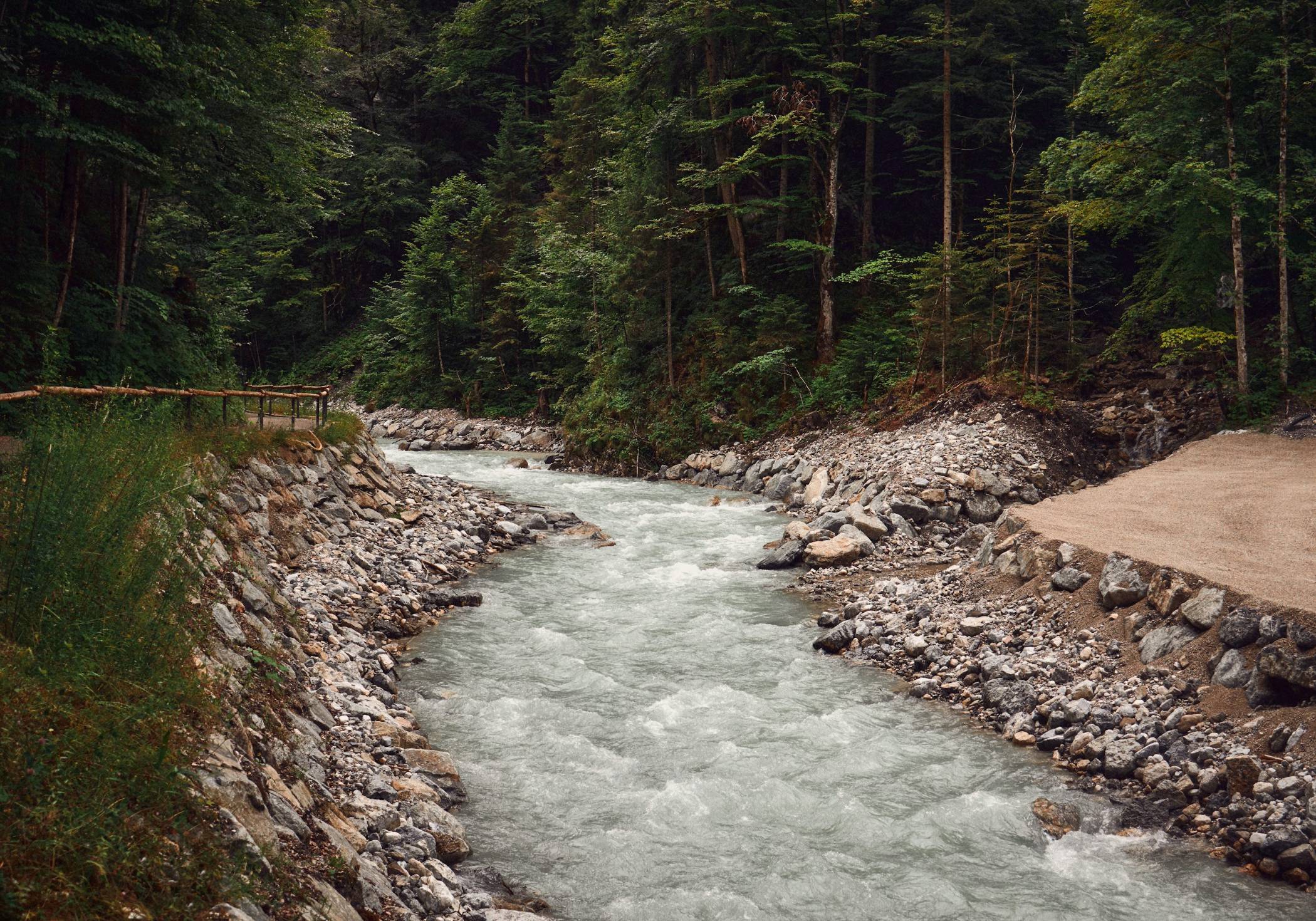
नदी हरियाली के बीच से बहती है और दूर-दूर तक पहाड़ दिखाई देते हैं

धरती और समुद्र की पहेली सीमा
धरती और समुद्र के मिलन स्थल में कुछ अविस्मरणीय होता है। यह प्रकृति का एक ऐसा मिलन बिंदु है जो समय और ज्वार-भाटा से तराशे अद्भुत नज़ारों को जन्म देता है। हर मोड़ और खाड़ी धरती व जल के अनूठे संगम से सजी है, जो आगंतुकों को खोजने, आराम करने और मनमोहक दृश्यों का आनंद लेने के लिए आमंत्रित करती है।

वृक्षों के पर्यावरण के लिए महत्व के 3 कारण
वृक्षों को अक्सर हमारे ग्रह के फेफड़े कहा जाता है, और इसका कारण पूरी तरह से सही है। ऑक्सीजन उत्पादन के अलावा, इनकी महत्ता जलवायु परिवर्तन से लड़ने और पारिस्थितिकी तंत्र का समर्थन करने की उनकी अद्वितीय क्षमता में निहित है। वृक्ष पर्यावरण में महत्वपूर्ण भूमिका निभाते हैं, जैसे हवा की गुणवत्ता में सुधार करना, प्रदूषण को कम करना और वन्यजीवों के लिए आवश्यक आवास प्रदान करना। इनके लाभ विशाल हैं, जो वृक्षों को पारिस्थितिकी संतुलन बनाए रखने और पृथ्वी पर जीवन को sustain करने के लिए अपरिहार्य बनाते हैं।

Exploring the Benefits of Rock Climbing: A Holistic Journey
Rock climbing is more than just a physical activity; it's an experience that enriches both your body and soul. This exhilarating sport offers a multitude of advantages, ranging from physical strength and toning to profound psychological and emotional growth. Here, we delve into the multifaceted benefits that rock climbing has to offer.

8 Spring 2024 Copenhagen Fashion Week Trends Ready for Your Wardrobe
Scandinavians famously proclaim, “there is no bad weather, only bad outfits.” While the designers and influencers at Spring/Summer 2024 Copenhagen Fashion Week may not have anticipated the dominance of severe rain, the Danish capital's ability to adapt to the unpredictable is truly exceptional. As GANNI concluded CPHFW, Copenhagen reaffirmed its status as a trendsetter—mastering versatility, refinement, and sustainability.
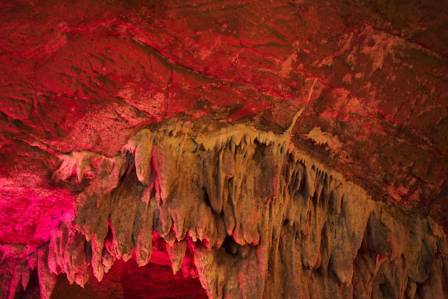
Great Hidden Beauty! Over 40 Karst Caves in Chongqing
Besides its famous mountains and spectacular river landscapes, including the Yangtze River and the Wujiang Gallery, Chongqing is also home to some breathtaking underground wonders. After admiring the city’s impressive mountain and water scenery, visitors are often amazed by the incredible karst caves hidden beneath the surface.